

What is sexuality?
Sexuality is about who you are attracted to, or who you might love.
Attraction means liking someone in a special way, feeling interested in them, or wanting to be close to them.
Different people have different feelings, and every sexuality is okay.
Sexuality can include:
- Romantic feelings — caring about someone or wanting a loving relationship
- Physical feelings — the body’s way of showing interest in someone as you grow older
- Who you may love
Everyone has a sexuality. These feelings develop at different times for different people.
- Some feel attraction towards people who are a different gender from their own
- Some feel attraction towards people who are the same gender
- Some feel attraction towards people of more than one gender
- Some people do not feel romantic or physical attraction towards anyone, and that is completely okay
- Some people’s sexuality changes over time
- People understand their sexuality at different ages. There is no rush
What is gender?
To explain gender, we need to understand the difference between sex and gender.
Sex is about the physical and biological parts of a person.
It includes things like:
- Chromosomes (the tiny structures in our cells that carry genetic information)
- Hormones (chemicals that affect how our bodies work)
- Reproductive system (body parts linked to making eggs or sperm)
In short: sex refers to certain physical features of the body.
Gender is about social roles and personal identity.
It includes:
- How society expects men, women, and other genders to act
- What roles or behaviours are seen as “for men” or “for women”
- How a person feels they fit with these roles and expectations
- How someone understands and describes their own gender inside themselves
In short: gender is about how a person feels and expresses who they are.
Sex and gender are not always binary
Binary means ‘two categories only’ — for example, male and female.
It is important to know:
- Not everyone fits neatly into the male or female categories
- Not everyone identifies strictly as man or woman for gender
- Some people’s sex or gender does not fit neatly into ‘male’ or ‘female’, and that is normal for them
- These people often call themselves ‘non-binary’
In short: sex and gender are more varied than just two categories.
Sex and gender can be different
A person’s sex (their physical features) and their gender (how they identify) may not match.
For example:
- Someone who was labelled male at birth (because of their physical features) might identify as female
- They would therefore be defined as a woman
In short: only the person themselves can say what their gender is.
Gender dysphoria
Some trans people experience gender dysphoria. This means feeling upset, stressed, or uncomfortable because their body does not match their gender. Not all trans people feel this way.
Support and options
- Trans people who do feel gender dysphoria may want support to make changes to their body, so it fits their gender better
- This can include:
- Hormone treatment
- Surgery
Social transitioning
Social transitioning is when a trans person makes everyday, non‑medical changes which they feel fit their true sense of gender.
These can include:
- Using a new name
- Using different pronouns (for example: she/her, he/him, they/them)
- Changing clothing or hairstyle to match their gender
- Changing how they speak about themselves
- Asking others to treat them as their gender
- Updating documents, if they want to, such as college, work or GP records
In short: social transitioning is about living as your gender in daily life.
Medical transitioning
Medical transitioning is when a trans person chooses medical care to help their body match their gender.
Getting help
- A trans person can speak to their GP if they want to explore these options.
- The GP can refer them to a gender clinic.
- Waiting lists are very long, so people may need support from others while they wait.
Summary
Autistic people are more likely to have differences in their sexuality and / or gender. Sexuality is about who you may love or feel attracted to – and everyone’s feelings are valid. Sex is about the body, while gender is about who you feel you are inside. Some people are trans or non‑binary – and only they can say what their true gender is. Trans people may choose social or medical steps to help them live as themselves. If they wish to explore medical options, they can speak to their GP to ask for a referral to a gender clinic. Everyone’s identity matters, and LGBTQIA+ people deserve understanding and respect.
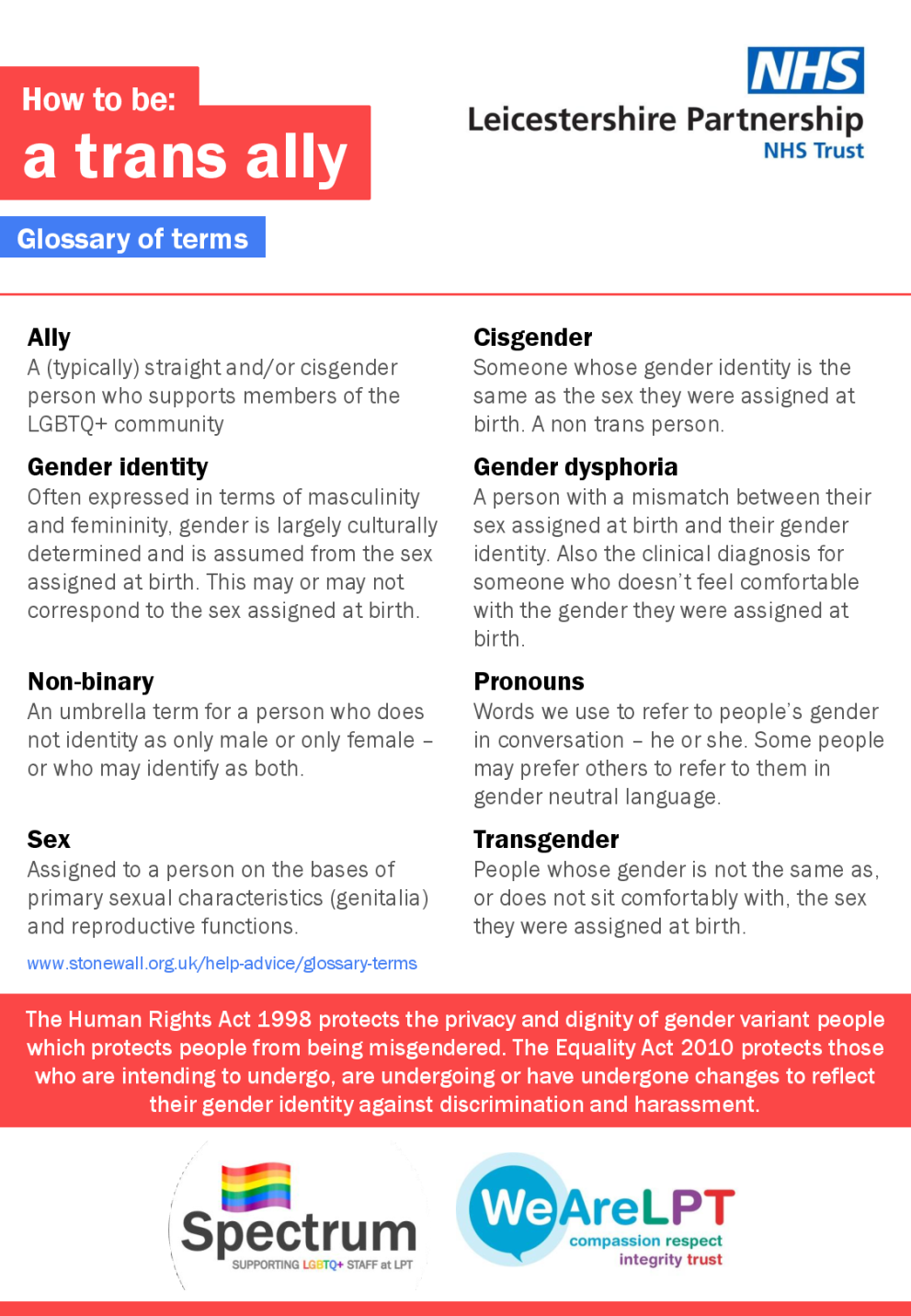
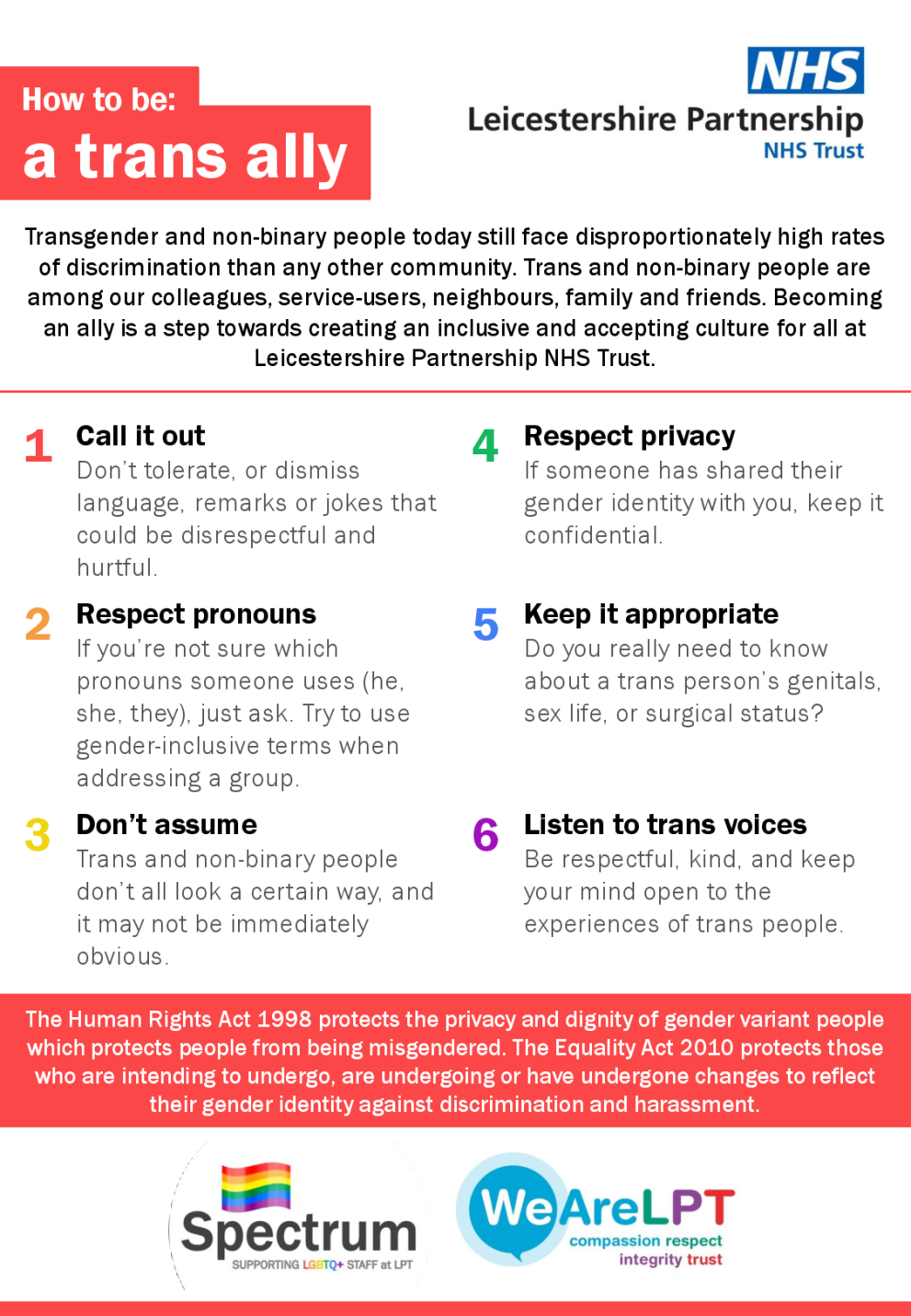
To help you understand more about what trans and non-binary means – and how to be an ally to trans and non-binary people, click the following links:
For information for young people about LGBTQIA+ click here for our Health For Teens article.