

Why autism friendly spaces matter
- Autistic people often have higher levels of anxiety in new or unpredictable places.
- Sensory input can be intense or painful.
- Social rules can feel unclear or confusing.
- Some autistic people have learning disabilities, and some do not.
- Some autistic people use verbal language, and some do not.
- There is no single approach that works for everyone.
- The best approach is to meet the needs of each individual autistic person.
Autistic people deserve to feel safe, welcome and understood in every local space. Autism friendly adjustments support this.
Low sensory load
Many autistic people experience sensory information more strongly. Sensory overload can cause anxiety, pain, shutdown or meltdown. These steps can help:
- Reduce noise when possible. This may include quiet corners, soft flooring or no background music.
- If constant quiet is not possible, offer set “reduced noise” times.
- Provide sensory support items, such as headphones or sunglasses.
- Use gentle lighting. Avoid flashing lights or flickering bulbs.
- If lighting cannot be changed everywhere, create one area with lower brightness.
- Keep smells low. Avoid strong perfumes, scented diffusers and strong-smelling cleaning products.
- Manage crowds. This may include quiet times, reduced capacity sessions or early morning entry.
- If crowd control is not possible, share information online about quiet periods and busy periods.
- Some places can offer an autism hour, an autism friendly session or a relaxed performance.
- Offer soft seating or natural fibre seating for people who use touch to understand a space.
- Provide objects that visitors are encouraged to touch, such as fabric swatches, wooden items or textured displays. Touch can give reassurance and help someone understand shape, temperature and texture.
Predictability and clear information
Uncertainty can be stressful. Clear information helps people feel safe and prepared.
- Use simple signage with clear symbols and short words.
- Provide photos, videos or maps. Make these available online or printable.
- Offer step-by-step guides that explain arrival, reception, toilets, exits and other key areas.
- Some people may find a sensory social story helpful. This can include a floor plan with sensory icons. Icons may show louder areas, quieter spaces, bright light, darker light, stronger smells or places to avoid.
- Explain any sounds that may happen, such as alarms, bells or loud hand dryers.
Calm, safe retreat areas
Many autistic people need a break from sensory input. A calm space can reduce anxiety and help people stay longer.
- Provide a quiet room or sensory break area.
- Offer soft seating such as beanbags.
- Allow dimmable lighting or soft lights like bubble tubes or lava lamps.
- Avoid strong smells or loud equipment in these areas.
- Provide sensory tools such as fidget toys, colouring sheets or stress balls.
- Make it clear that people can use these spaces when they need to, without having to ask.
Communication friendly practices
Communication needs vary between autistic people. Clear and respectful communication helps everyone.
Train staff to understand that they should:-
- Speak clearly and calmly.
- Give extra time for processing information.
- Use literal language.
- Avoid idioms.
- Understand that stimming is a normal way of self-regulating.
- Accept adjustments such as headphones, sunglasses, hats, comfortable clothing or bringing safe foods.
- Ask questions kindly and without judgement.
- Offer alternatives instead of saying “No.”
- Allow writing, typing or pointing if speaking is hard.
- Offer flexible ticketing, when possible, such as early entry or late entry.
- Allow queue skipping or offer a quiet waiting area.
Accessible facilities
Simple changes can make a big difference.
- Clear toilet signs with pictures.
- Toilets without hand dryers or with paper towel options.
- Clear labels such as “automatic tap” or “pull to lock.”
- Quiet spaces for eating.
Respect for autistic lived experience
Autistic people know what works best for them, and their ideas should help shape future plans and services.
- Ask autistic people what they need and listen to their answers.
- Make sure autistic people are involved in designing, creating, and checking services or resources.
- Use approaches that respect autistic ways of thinking and living, instead of methods that try to force people to act in certain ways.
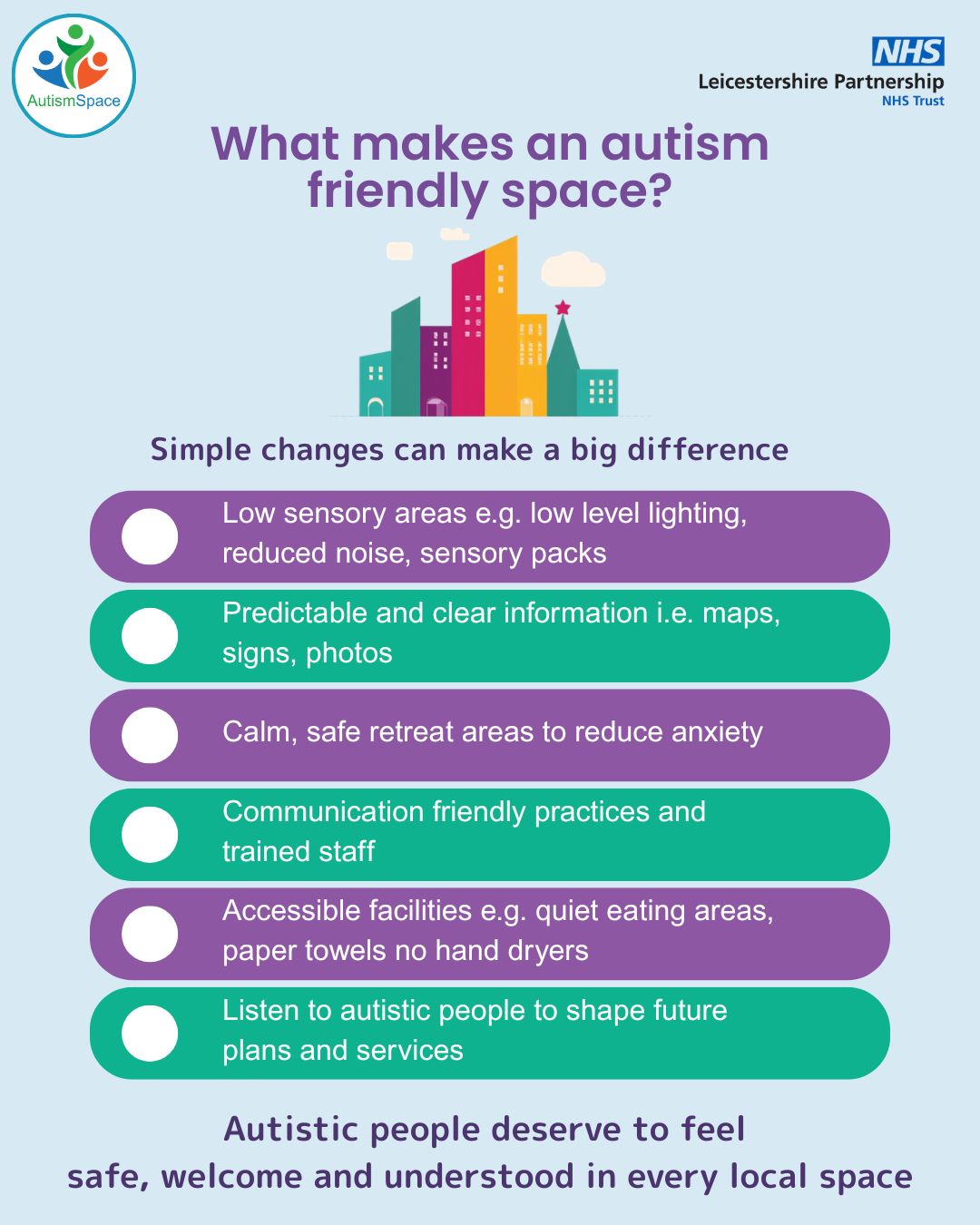
Click here to view or download this graphic as an accessible pdf
Examples of autism friendly spaces
These examples show good practice. They may help organisations understand what is possible.
Shops and supermarkets
- A supermarket may offer reduced noise hours and dimmed lighting.
- Staff may allow customers to enter through a quieter entrance.
- Clear labels and calm checkout lanes can help some people.
Libraries
- A library may offer quiet rooms, soft lighting and sensory packs.
- Clear signs and visual maps can reduce stress.
Museums and galleries
- A museum may offer relaxed sessions with lower capacity.
- They may provide visual guides and a quiet break room.
- Some offer “touch tables” with objects that visitors can explore.
Parks and outdoor spaces
- A park may include sensory friendly planting, quiet benches, clear signposting and calm nature trails.
- A café area may offer a low noise seating area.
Cinemas and theatres
- Some cinemas and theatres offer relaxed screenings or relaxed performances.
- These may include lower volume, no sudden darkness and freedom to move or stim.
Leisure centres
- A swimming pool may offer autism friendly swim sessions with lower noise and reduced numbers.
- Staff may allow early entry to avoid busy queues.
Health and community venues
- A GP practice may offer quiet waiting spaces and visual guides.
- Staff may provide extra processing time and literal explanations.
Information on green spaces, autism friendly supermarkets, cinemas and theatres, and local groups and clubs in the local area of Leicester, Leicestershire and Rutland can be found here: Venues and places to visit
The National Autistic Society has shared more ideas to help make leisure activities accessible for autistic people. These ideas include support for cinemas, theatres, sports activities and museums. Click here to access the website and read more.
The National Autistic Society has also created an Autism Friendly Public Space Checklist. This resource explains simple steps that organisations can take to improve their environment.
The National Autistic Society also offers an Autism Friendly Award. This award shows that an organisation has met clear standards for an autism friendly environment. It demonstrates a commitment to good practice. Click here to read more about the award and how to apply here.
Summary
Autism friendly spaces help autistic people feel safe, welcome and able to enjoy their communities. Sensory adjustments, clear information, calm areas, supportive communication and respect for autistic lived experience all matter. The best approach is to understand each person’s needs and offer flexible, kind and neuro-affirming support. These changes help autistic people live happier, healthier and more fulfilling lives.