

What does emotional regulation mean?
Emotional regulation means taking steps to manage how you feel.
It does not mean hiding emotions. It does not mean trying to look “calm” to please others.
Autistic people regulate emotions in many valid ways, such as:
- Stimming or moving their body
- focusing on special interests or spending time alone
- using predictable routines
- using sensory tools
All these strategies are healthy and acceptable. They help people feel safe.
Some autistic people also experience alexithymia.
This means:
- emotions can be hard to notice
- emotions can appear later
- it may be difficult to describe what the feeling is
This is not the person’s fault. It is a difference in how their brain processes emotions.
Understanding anxiety triggers
A trigger is something that increases stress. Triggers are different for everyone.
It is important to know that there is no “right” or “wrong” trigger.
Triggers may be:
- fast triggers (stress happens straight away)
- slow triggers (stress builds over time)
Examples of fast triggers
- difficult, confusing or urgent tasks
- tasks that are boring or unpleasant
- being interrupted
- unexpected changes
- unclear communication
- feeling ignored
- too many demands
- being told “no”
- sensory discomfort such as noise, bright lights, heat or strong smells
- unexpected touch
- eating something with an unpleasant taste
Examples of slow triggers
- physical health issues
- feeling tired or unwell
- feeling bored or unstimulated
- being around certain people
- lack of social connection
- certain times of year (for example, busy holidays)
- certain places
Knowing a person’s specific triggers helps plan support before stress becomes overwhelming.
Strategies to reduce or manage anxiety triggers in the home, school or work environment
Adults around autistic people can use the following ideas:
Talk about preferences
If you support someone with anxiety, ask clear questions such as:
- “What helps?”
- “What feels stressful?”
- “What should I avoid doing?”
Notice early signs
Different people prefer different forms of feedback.
For example:
- Some people want clear, direct feedback.
- Others prefer a gesture, symbol card or message.
Agree on signals for “I need space” or “I need help”
Offer choices
Choice increases control and reduces pressure.
Examples:
- “Do you want a break now or after this task?”
- “Would headphones help?”
Reduce sensory load
Create a calm space
Examples:
- lower noise
- dim lights
- allow sunglasses or hats
- reduce crowds where possible
- use predictable routines or plan for changes
Support breaks
- Breaks help the nervous system recover. Respect requests for space without asking questions
Examples:
- leaving the room
- going outside
- using a quiet space
Reduce attention when needed
Some autistic people feel calmer with:
- less conversation or short, direct language
- reduced eye contact
- time alone
Provide sensory aids
Use sensory items and keep them at hand ready or when going out
Examples:
- ear defenders
- sunglasses
- weighted items
- fidget tools
Different tools help different people. There is no one-size-fits-all approach. These steps help reduce stress and support everyone’s wellbeing. Once stratigies have been identified they should be shared with everyone around the autistic person at home, school and work.
Understanding and supporting autistic people
Some autistic people cannot explain their anxiety. They may not have the words or may notice feelings later.
It can help to talk when it is calm, such as:
- during a walk
- in the car
- at bedtime
There may be a need to observe patterns.
For example:
- A child gets stressed every morning before school.
- Work may feel overwhelming on Mondays.
- The morning routine may feel rushed or noisy.
Once you understand the trigger, reduce it (if you can), using some of the strategies above.
Small adjustments can reduce anxiety and help autistic people feel safe.
What to do with avoidance and fear
Avoidance is common when someone is anxious. Avoidance brings short term relief, but long-term stress. It teaches the brain that the situation is dangerous.
A helpful approach is ‘gradual exposure’.
This means:
- breaking the fear into small steps
- starting with the easiest step
- staying with the feeling until it becomes manageable
- moving to the next step only when ready
For example, if a person fears a task:
- Look at a picture of the task.
- Sit near the task.
- Touch or hold the equipment.
- Try the easiest part of the task.
- Build confidence slowly.
The goal is to increase safety, not force the experience. The pace must match the person’s comfort level.
Top-down strategies: changing thoughts
Thoughts can increase or reduce anxiety.
Examples of unhelpful rules:
- “I must not do this until I feel calm.”
- “I cannot cope.”
Helpful rules support courage and self-acceptance:
- “I can do this even if I feel anxious.”
- “Anxiety feels uncomfortable, but it will pass.”
Acceptance and Commitment Therapy (ACT) ideas can help with this approach.
Instead of trying to eliminate anxiety, ACT helps
- to reduce the struggle against difficult thoughts and feelings
- increase psychological flexibility
- encourage people to live in ways that fit their values
- supporting self‑acceptance and self‑compassion
It removes pressure to change “who you are” and instead helps you build a life that works with your autistic traits, not against them.
For more information about ACT
- watch this video:
https://www.actmindfully.com.au/free-stuff/free-videos/ - Read ‘The Happiness Trap’ by Russ Harris
Bottom-up strategies: calming the body
Body based strategies help the brain feel safe.
Examples:
- slow breathing
- progressive muscle relaxation or mindfulness
- gentle movement or stretching
- rocking or rhythmic stimming
- warm showers
- cold splashing of face or hand washing
These strategies send a message to the brain that the person is safe and can relax.
Other helpful strategies
- exercise
- talking to someone you trust
- quiet hobbies
- soothing sensory input
- time in nature
- positive, safe physical contact (if wanted)
- allowing time to prepare and / or recover from stressful events/situations
- Asking myself what I value about ‘me’
Support should always respect the autistic person’s preferences and sensory needs.
Reminders or tips
This could be a simple list written down or kept on a note in a phone that lists:
- triggers
- early warning signs
- helpful strategies
- unhelpful or harmful strategies
- ways other people can support
- emergency contacts of people who support
- What thoughts I need to remember
It then can be shared with family, friends, carers, school or the workplace. Or you could use a resilience tool kit like this:
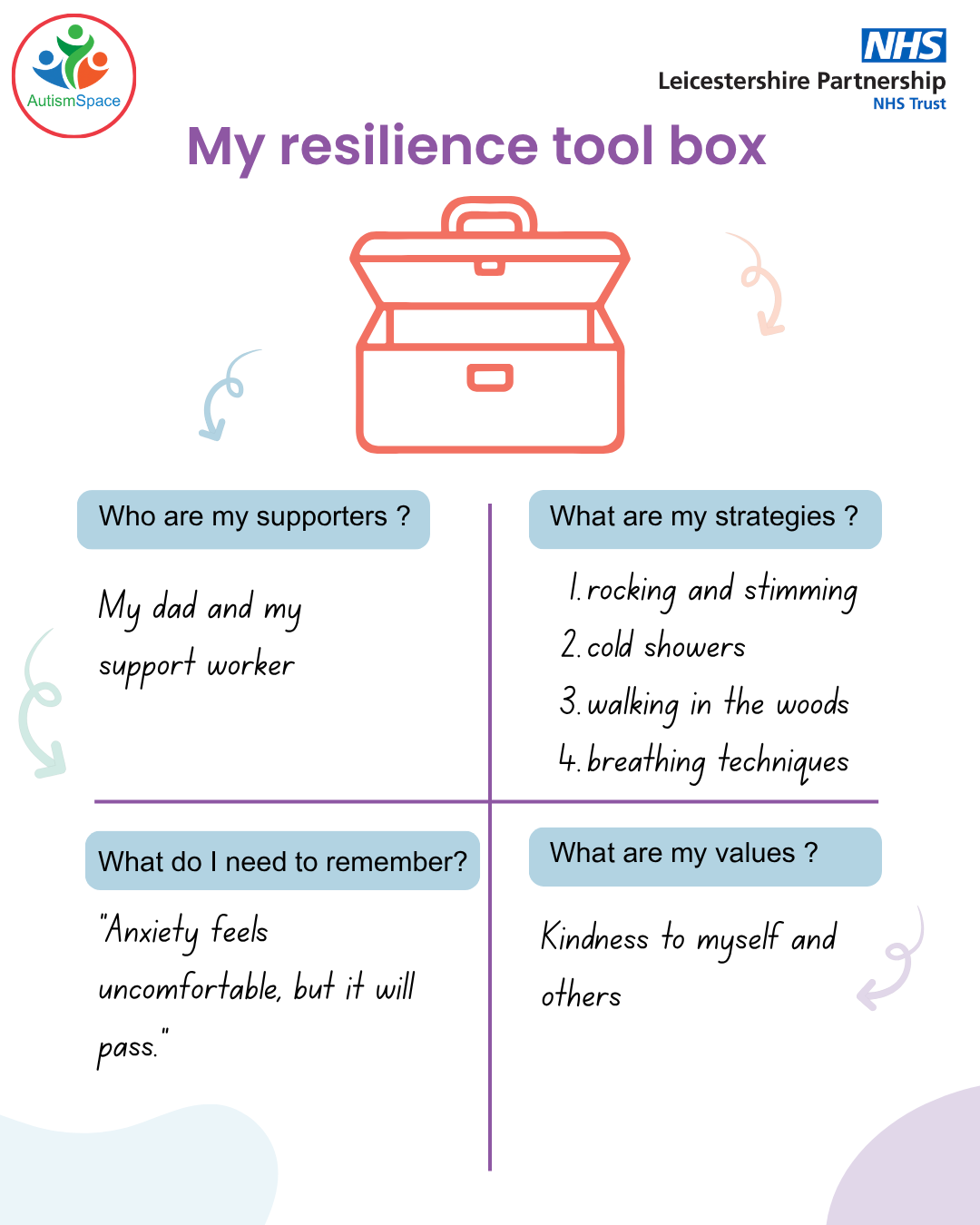
Click here to download your own tool kit template.
For information on getting help in a mental health emergency or crisis, click here
For resources and services to support with emotional health and wellbeing, click here
Summary
Autistic people often face due to sensory overload, uncertainty, trauma, social expectations and a world that is not designed for their needs.
Understanding personal triggers and using supportive, neuro-affirmative strategies can reduce stress and increase wellbeing.
There is no single solution. The best approach is personalised and respects each person’s unique profile, needs and strengths.
With the right support, autistic people can feel safer, more in control and better able to manage anxiety in daily life.