
Autistic people may feel unsafe because people misunderstand their communication, they struggle to get the right support, they fear not being believed, they feel burnout or overwhelm, they feel lonely or isolated, they depend on others for daily living tasks, or they mask their needs to cope. Safeguarding should never blame autistic people for their differences, and support should always fit each person’s own needs and preferences.
Deciding what’s the right thing to do can be stressful, particularly if you or the person you are concerned about is reluctant to accept support. If you are not sure what to do you can always seek advice.
What does safeguarding mean?
Everybody has the right to live safely. Safeguarding aims to:
- support each person to make their own choices
- stop harm before it happens
- give help to people who face higher risks
- work together with local services
- make sure people are open and honest about what they do
What is safeguarding for adults?
- Protects people aged 18 or over.
- For adults who have care and support needs.
- For adults who may be at risk of abuse or neglect.
- Helps adults who cannot stay safe without support.
What is safeguarding for children?
- Protects anyone aged 0–17.
- Keeps children safe from harm, abuse and neglect.
- Helps when a child is being hurt, exploited or not cared for.
- Includes safety at home, in the community and online.
What is abuse and neglect?
Abuse is when someone uses power or control over another person in a way that causes harm.
Abuse can happen once or many times.
It can happen anywhere.
The person causing harm may be someone the adult or child knows or a stranger.
Types of abuse include:
- Physical abuse – hurting someone’s body
- Sexual abuse – any sexual activity without clear, freely given consent
- Emotional abuse – threats, bullying, humiliation or controlling behaviour
- Financial abuse – stealing money, forcing someone to pay for things, or controlling someone’s money
- Neglect – not giving basic care, food, warmth, or medical help
- Discrimination – harm based on autism, disability, race, gender, sexuality or other characteristics
- Organisational abuse – poor care in a service or placement
- Domestic abuse – harm in a close relationship
- Modern slavery – forced work, exploitation or trafficking
- Self neglect – when someone is unable or unwilling to look after themselves
Autistic people may find it hard to recognise abuse if:
- social rules feel unclear
- they take words at face value
- they feel afraid to say “no”
- they have been taught to comply with adults or authority
- they think the behaviour is “normal” because it has always happened
Signs of abuse or neglect
Signs can be different for each person. Some autistic people may show their distress through:
- changes in mood
- withdrawing from others
- changes in daily routines
- changes in communication
- more meltdowns or shutdowns
- stress around certain people or places
Other signs may include:
- injuries that cannot be explained
- missing items or money
- someone new controlling access to the adult
- pressure to do things the adult does not want to do
- not having enough food, clothing or warmth
- being scared, anxious or confused
There is no “right” or “wrong” way to react. Every autistic person responds to stress differently.
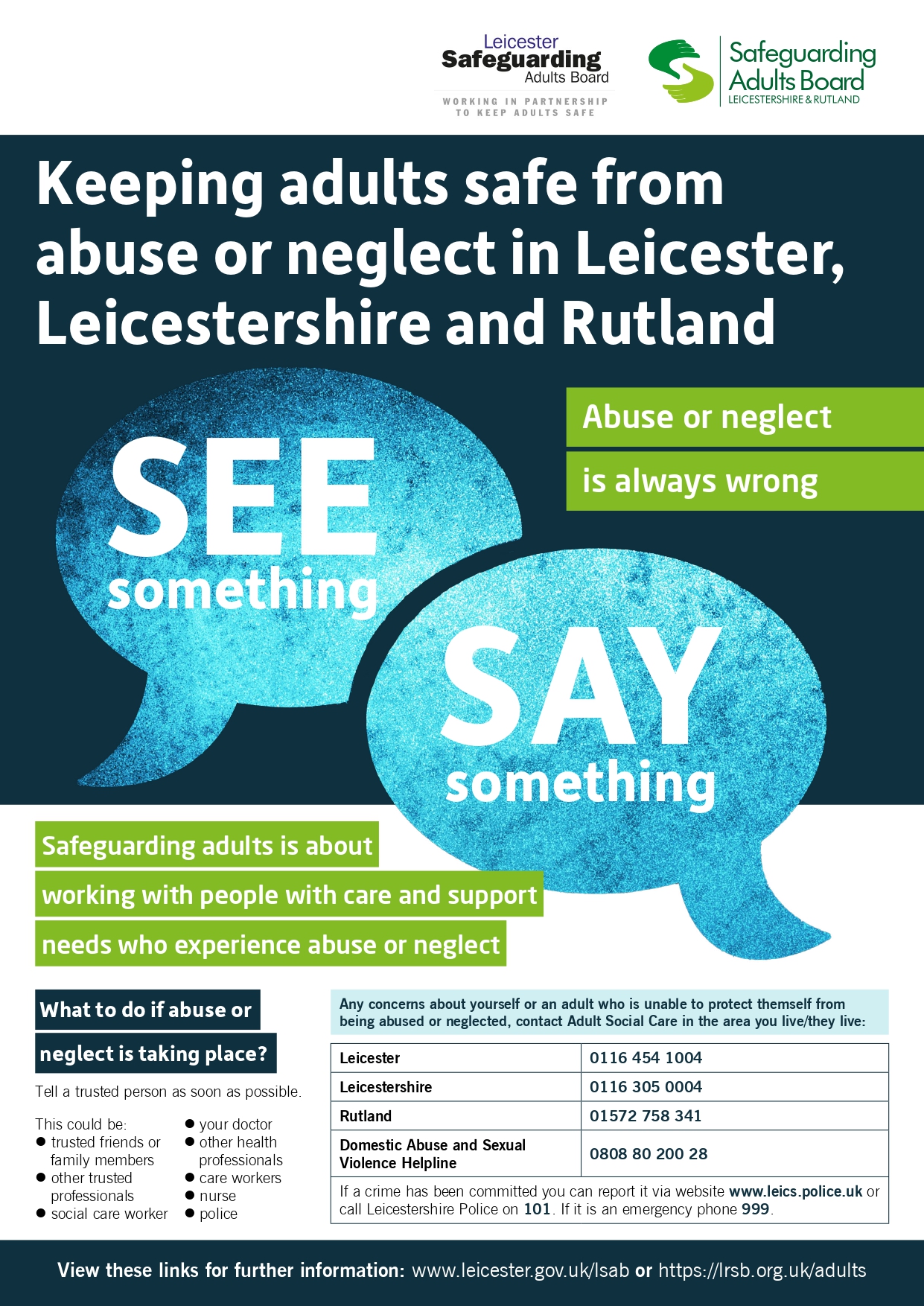
The See Something, Say Something animations aims to raise awareness of the signs of abuse and neglect for people with care and support needs. Click here to access this animation.
Understanding self-neglect
Self-neglect is when an adult does not look after themselves and cannot or will not accept help. Autistic people may struggle with daily life skills due to how autistic brains process information and experiences and this can put their health and safety at risk. Click here for our autism self care and advocacy article on Autism Space.
Click here to watch the self-neglect animation.
What to do next
If you think you are unsafe, or you think someone else is unsafe:
- talk to a person you trust, this can be a professional (a teacher or college staff member a support worker or your GP) or a friend or family member
- explain what is happening
- ask for help
- if you cannot speak, show a message or picture
- if you are in danger now, call 999
- You can also visit resources sections for local services: Click here to access this section of our website.
National Autistic Society have produced a guide on safeguarding and child protection with specific reference to autistic young people .
Solihull safeguarding adults board have produced a guide intended to provide professionals with an introduction to autism, and to support them in exploring how they can ensure autistic people are involved in safeguarding enquiries about them.
It covers important areas including risk enablement which enables people to take risks by managing them appropriately, rather than restricting the person’s opportunities.
Click here to access this guide here from the Solihull safeguarding adults board..
If you are looking at this page and you are outside of Leicester, Leicestershire and Rutland please visit the NHS England Safeguarding app for further information on who to contact locally in your area,
Click here to access the NHS safeguarding app.
Key points
Safeguarding means staying safe from harm.
Autistic adults may face extra risks because of stress, communication needs, loneliness, or lack of support.
Abuse and neglect can happen anywhere and to anyone.
There is no blame on the person who is harmed.
If something does not feel right, speak to someone you trust.
Help is available, everyone deserves safety and respect.