

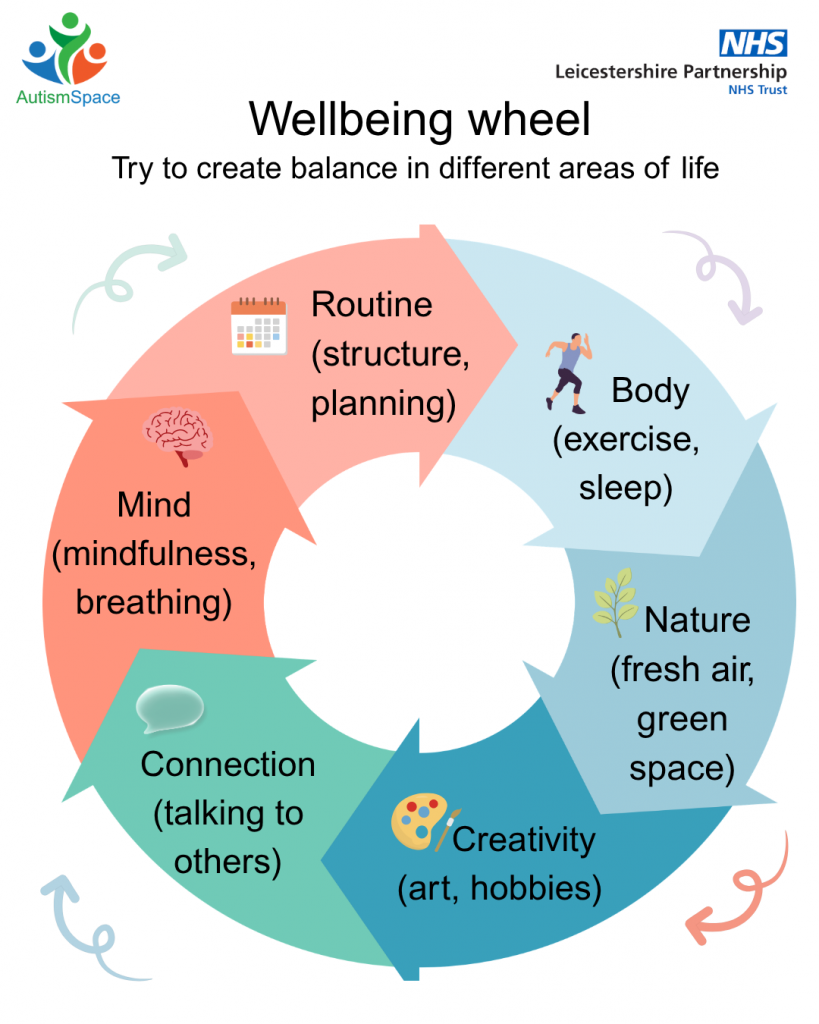
For a downloadable PDF version of this infographic, click here: complete wellbeing picture
Wellbeing can be divided into three main areas
- Emotional Wellbeing
Emotional wellbeing is not about having no emotions, but about understanding your feelings and using them positively to guide your life. - Psychological Wellbeing
Psychological wellbeing means having good mental and emotional health, being free from mental disorders, and managing stress so it does not stop you enjoying life. - Social Wellbeing
Social wellbeing is about feeling connected, included, and supported by others. Culture, lifestyle, and shared values all play an important role.
Not looking after your mental wellbeing can affect:
- The way you feel
- The way you think
- The way you act
It also helps determine how you:
- Handle stress
- Relate to others
- Make choices
Keep a routine
- Structure can help you feel more in control
- Changes, even small ones, can cause stress
- Plan your day or week
- Routines may not always be possible, for example if you are ill or plans change
- It can help to be ready to be flexible and make small changes when needed
- Try to stay calm and give yourself time to adjust if your routine changes
Example:
- Wake up, eat, and go to sleep at similar times
- If one day is different, return to your routine when you can
- Plan ahead for changes if possible
- See more: leicspart.nhs.uk/autism-space/health-and-lifestyle/the-benefits-of-familiarity-predictability-for-autistic-people/
Spend time alone when you need it
- Time alone can help you recover from stress
- Choose a quiet, safe space
- See more: leicspart.nhs.uk/autism-space/emotional-wellbeing/autism-self-care-and-advocacy-why-it-matters/
Spend time on your interests
- Your interests can support your wellbeing
- They can help reduce stress and improve mood
- See more: leicspart.nhs.uk/autism-space/health-and-lifestyle/hobbies-and-interests-for-autistic-people/
Learning a new skill
- It can give you a sense of achievement
- It can improve your confidence
Example:
- drawing
- knitting
- model building,
- cooking a new meal
- playing a musical instrument
Take breaks
- Rest before you feel overwhelmed
- Break tasks into smaller steps
- See more: leicspart.nhs.uk/autism-space/emotional-wellbeing/autistic-fatigue-and-burnout-coping-strategies/
Support your sensory needs
- Use earplugs, ear defenders, or noise-cancelling headphones
- Wear sunglasses or light-sensitive glasses
- Use calming sensory items
- See more: leicspart.nhs.uk/autism-space/health-and-lifestyle/sensory-processing/
Use a sensory or self-soothe box
- Fill a box with items that help you feel calm
- This might include soft textures like ribbons, favourite objects or reminders of favourite things, music, familiar smells
- See more: leicspart.nhs.uk/autism-space/health-and-lifestyle/how-to-make-a-self-soothe-box/
Use visual supports
Even people who usually use spoken language may find words harder when stressed.
- Visual aids can help with planning and remembering
- They can support communication
Examples:
- Lists
- Picture cards
- Visual schedules
See more: www.leicspart.nhs.uk/autism-space/health-and-lifestyle/autism-and-visual-schedules/
Eat and drink regularly
- Food and drink support your brain and body
- Eating a range of foods gives you the best chance of getting the nutrients your body needs
- Try different foods and ways of preparing them
- Use reminders if needed
- If eating or drinking is difficult, speak to your GP.
See more: www.leicspart.nhs.uk/autism-space/health/eating-and-drinking-difficulties-for-autistic-people/
Sleep well
- Sleep helps your body recover
- Try a regular bedtime routine
See more: www.leicspart.nhs.uk/autism-space/health-and-lifestyle/autism-and-sleep-2/
Do gentle exercise
- Movement can help your mood
- It does not need to be intense
- Try to build it into your daily routine
- Linking it to an activity you already do can help you keep it regular (for example, a walk after lunch)
Examples:
- Walking
- Swimming
- Stretching
Try breathing exercises
- Slow breathing can reduce anxiety
- Practise when you feel calm
- You can try breathing in gently through your nose, like you are smelling a flower
- Then breathe out slowly through your mouth, like you are blowing on a candle to make the flame flicker, but not go out
Practise mindfulness
- Focus on the present moment
- This can help reduce stress
- See more: leicspart.nhs.uk/autism-space/emotional-wellbeing/mindfulness-for-autistic-people/
Do something kind
Kind actions can lead to positive feelings.
Examples:
- Sending a message to someone you trust
- Helping someone with a small task
- Sharing something you enjoy with another person
- Smiling or saying hello, in everyday situations, for example to a shop assistant, if it feels comfortable for you
- Be careful about who you approach. Do not say hello to random strangers, as this can sometimes put you at risk. Try to choose safe situations and people you feel comfortable with
Spending time outside in nature
Natural spaces are often quieter and less overwhelming. It can improve your mood, focus and support sleep.
Examples:
- Sitting in a garden or park
- Watching clouds, trees, or water
- Listening to natural sounds
- Spending time in green spaces or quiet outdoor areas
Spend time with others
It can help reduce feelings of loneliness and feel supported
Examples:
- Talking with a friend or family member
- Sitting quietly with someone you trust
- Sharing an activity or interest
Keep a journal
Getting your thoughts out can help your mental wellbeing. You can do this by writing them down (even if no one else reads it) or by talking to someone you trust.
- Write, draw, or collect images
• Record how you feel
• Note what helps and what is difficult
• You can also record positive moments
Have positive, safe physical contact (if wanted)
- Physical contact can help some people feel calm and safe
- This should always be your choice
Examples:
- A hug from someone you trust
- Holding hands
You do not have to do this if it does not feel comfortable for you.
Make coping strategies part of your routine
- Use helpful strategies regularly
- This can reduce stress
- It can make difficult times easier to manage
Looking after your physical health
- Physical and mental health are linked
- Eating well, sleeping well and doing some exercise, can support both your body and your mood
- If you are having physical health problems, you should seek health support
- If this feels hard, ask for help from someone you trust
Spot your early warning signs
If you can, try to be aware of how you’re feeling, and if you can spot any signs you might be becoming unwell. These will be individual to you, but it can be useful to reflect on what these may be so you can get support for your mental health problem as soon as possible. Tracking your moods or using a mood diary can help you to work out what positively and negatively affects your mental wellbeing. You can then take steps to avoid, change or prepare for negative situations.
If things feel too hard
Sometimes strategies may not help enough. You might be feeling anxious, low, or overwhelmed. It is okay to ask for help. You can read more about autism and emotional wellbeing here:
www.leicspart.nhs.uk/autism-space/emotional-wellbeing/
- You can talk to someone you trust. This might be a friend, family member, carer, or partner
- You can contact your GP for advice and support
- You can use a phone or text support service leicspart.nhs.uk/autism-space/health-wellbeing-resources/emotional-health/
- If it feels hard to reach out, you can ask someone to help you do this
- You can see further support services here leicspart.nhs.uk/autism-space/health-wellbeing-resources/emotional-health/
- There is also Autism specialist services available in Leicester, Leicestershire and Rutland see Local Autism specialist services for referral criteria leicspart.nhs.uk/autism-space/health-wellbeing-resources/local-authority-nhs-specialist-autism-services/
Key Points
- Life can be more tiring and challenging for autistic people, so everyday wellbeing is important
- Small, regular actions can help reduce stress and support your mental health
- Find what works for you. Everyone is different
- Use strategies like routines, rest, interests, and sensory supports to help you cope
- Looking after your body (eating, sleeping, and moving) also helps your mind
- Getting your thoughts out, for example by writing or talking, can support your wellbeing
- Spend time alone or with others in ways that feel safe and comfortable for you
- Try to make helpful strategies part of your routine
- If you try these ideas and you still do not feel better, it is important to ask for help
- You can talk to someone you trust or contact your GP for support